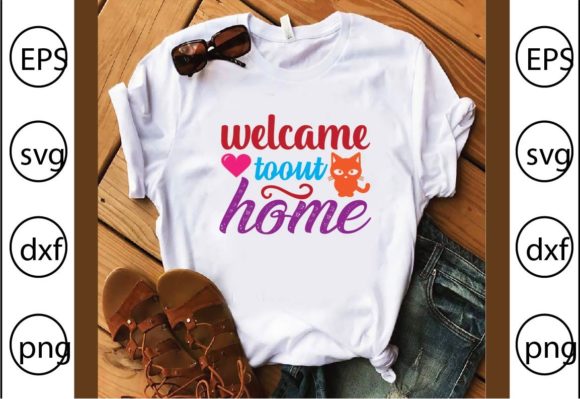
Welcame to out Home
As a designer and embroidery product reviewer, I often find myself evaluating new designs with a critical eye—especially when they're intended for real-world use in custom apparel, handmade products, or commercial projects. Welcame to out Home is one such design that caught my attention. It's an SVG cutting file that promises versatility across a range of applications. But how does it hold up in actual embroidery work? Let’s break it down.
The First Impression
Welcame to out Home has a simple, clean aesthetic that feels immediately approachable. The layout is straightforward, with a bold text block that suggests it's meant for something personal or welcoming. The theme is warm and friendly, which makes it ideal for items like tote bags, sweatshirts, or baby clothes. The design doesn’t have excessive details, which means it’s likely to translate well into various embroidery formats.
The visual personality of the design leans toward minimalism. It’s not overly complex, but it still has enough character to stand out on its own. This makes it a good fit for small businesses looking for a versatile graphic that can be used across multiple product types without overwhelming the viewer.
Real-World Embroidery Performance
When testing Welcame to out Home on different fabrics and project types, it performed consistently well. On t-shirts and sweatshirts, the design looked crisp and legible. The stitch density was appropriate, allowing the text to remain clear without appearing too dense or too sparse. For a machine embroidery design, this balance is key to ensuring the finished product looks professional.
On baby clothes, the design worked well, though I’d recommend using a light stabilizer to prevent puckering, especially on thinner materials. The design also translated nicely onto embroidered patches and aprons, where the simplicity of the layout helped maintain clarity even at smaller sizes.
One area where the design could be more careful is in its application on dark fabrics. While it works, the contrast between the thread color and the fabric can sometimes be subtle. I’d suggest testing different thread colors to ensure visibility, especially if the design will be used for commercial purposes.
Where to Use Carefully
Welcame to out Home isn’t ideal for every embroidery project. For instance, on small hoop sizes, the design might feel cramped, making it difficult to achieve even stitching. If you're working on a cap or a curved surface, you may need to adjust the design slightly to accommodate the shape.
Thin or stretchy fabrics can also pose challenges. Without proper stabilizer, the design might shift or lose definition. Similarly, on textured fabrics, the detail might get lost, so it’s worth testing on a similar material before committing to a full project.
For detailed corners or tiny lettering, the design holds up reasonably well, but it’s not the most intricate option available. If you're planning to use it for a decorative accent or a layered garment, you might want to consider a more detailed design.
Impact on Visual Appeal and Customer Perception
Welcame to out Home has a strong visual appeal that can enhance the value of any finished product. Its clean lines and simple layout make it easy to integrate into a brand’s overall look, whether you're creating personalized gifts, custom apparel, or small shop merchandise.
From a customer perspective, the design feels authentic and well-crafted. It’s the kind of design that can be used for holiday gifts, wedding presents, or even as part of a boutique branding strategy. The ease of use and adaptability make it a solid choice for Etsy sellers and craft business owners looking for reliable design assets.
When it comes to handmade presentation, Welcame to out Home adds a touch of professionalism without being too flashy. It’s the kind of design that can elevate a simple pillow cover or a basic tote bag into something more special.
Practical Designer Notes
If you’re considering using Welcame to out Home in your embroidery projects, there are a few things to keep in mind. First, always test the design on scrap fabric before using it on a final product. This helps you assess how it looks in different thread colors and fabric textures.
Check the stitch density to make sure it aligns with your project’s needs. A design that’s too dense might cause issues on thin or stretchy materials, while one that’s too light might not show up well on darker backgrounds.
Confirm the hoop size required for the design. If you're working with a small hoop, you may need to adjust the design or split it into sections. Also, inspect the small details closely—especially if you're planning to use it for a commercial project.
Test the design in black and white mockups to see how it looks without color. Compare it against both light and dark fabric backgrounds to ensure visibility. Using the right stabilizer is crucial, especially on delicate or stretchy materials.
Finally, make sure the design is suitable for both personal and commercial use. Check the licensing terms before selling finished items or digital products. Even though the product description mentions compatibility with Cricut and Silhouette, it’s always wise to verify the exact file formats and machine compatibility before purchasing.
Conclusion: A Versatile Design for Many Uses
Welcame to out Home is a practical and adaptable design that can fit into a variety of embroidery projects. Its clean, welcoming style makes it ideal for custom apparel, personalized gifts, and small business merchandise. While it’s not the most intricate design on the market, its simplicity is also its strength—making it easy to use across different fabrics and applications.
For designers, crafters, and small business owners, this is a reliable option that can help build brand consistency and add value to handmade products. With a little care and testing, it can become a go-to design for many different uses, from holiday gifts to everyday wearables.