Tshirt Ruler Alignment Tool Graphics for Crafts
When a client hands you a project that involves producing consistent, placement-sensitive designs across multiple garments, your pulse quickens. Not because the work is difficult, but because you know the margin for error is razor thin. That is exactly where I found myself last month when a small organic cotton apparel brand asked me to prepare a limited run of twenty-five hand-printed tees for their pop-up market launch. Every shirt needed a centered chest graphic, a small back neck label, and a sleeve accent, all positioned identically across different sizes. That is when I reached for the Tshirt Ruler Alignment Tool and put it through a real client workflow.
First Impressions and Visual Mood
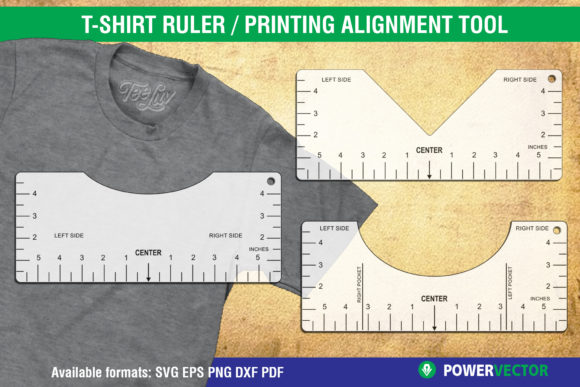
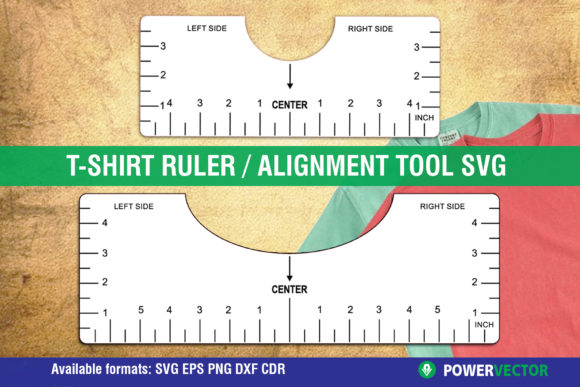
Opening the Tshirt Ruler Alignment Tool for the first time, I immediately appreciated the clean, no-nonsense vector construction. This is not a decorative clipart set. It is a functional guide system built with precise alignment marks, center indicators, and sizing references that feel engineered for production rather than decoration. The mood it creates is one of confidence and control. There is nothing whimsical or experimental here. Instead, the tool communicates reliability, repeatability, and attention to detail. For a designer who values efficiency and professional-grade results, this is a welcome change from the decorative fluff that clutters many design bundles.
The style is thoroughly modern in its utility. It does not impose a visual personality on your project. It simply gives you the scaffolding to place your own artwork with surgical accuracy. That neutrality makes it a versatile graphic design asset that works across many client contexts, from indie maker brands to established retail labels. If you are building a brand identity around handmade quality, having an alignment tool that ensures every shirt looks identical is a subtle but powerful trust signal.
How It Performs in Real Design Situations
I tested the Tshirt Ruler SVG files across several common scenarios. In my client project, I used the tool to mark placement for a t-shirt design that combined a front logo, a small back neck imprint, and a left sleeve graphic. The alignment marks allowed me to maintain consistent spacing even when switching between child and adult sizes. The T-shirt Alignment Tool Dxf Vector Files opened cleanly in my vector editing software, and the layers were organized logically. I could isolate the center guides, edge references, and sizing indicators without hunting through messy grouping.
Beyond garment work, I explored how the asset performs in product mockup creation. When you are preparing visuals for an Etsy product listing or a print-on-demand catalog, accurate placement makes the difference between a mockup that looks convincing and one that feels amateurish. The tool gave me a reliable reference for centering artwork on flat shirt templates, tote bags, and even aprons. I also used it to build a repeatable template for social media graphics that showcase front and back views of apparel. The alignment references saved me from guessing and redoing each post individually.
For Cricut project work, the tool is practically indispensable. If you have ever struggled to place heat transfer vinyl exactly where it needs to go on a dark fabric, you know the frustration of wasted material and crooked results. The sublimation design workflow also benefits from precise alignment, especially when you are registering multiple colors or positioning intricate patterns. The vector files are designed to work with laser, Cricut, Glowforge, and Silhouette cutting machines, which means you can cut physical templates from cardstock or acrylic and use them as reusable guides. That is a huge time saver for repeat orders.
Where the Asset Works Best
After several rounds of testing, I found the Tshirt Ruler Alignment Tool excels in large layout areas where you have room to reference the guides without squinting. It is ideal for hero graphics on product pages, where you need to show multiple angles of a garment with consistent placement. It also shines in packaging design when you are creating hang tags or inserts that need to align with the garment fold. For marketing visuals that feature models wearing your client’s apparel, the tool helps you build a template that keeps the logo position identical across every shot.
I found it particularly useful for themed collections and campaign visuals. When a client launches a seasonal line, every piece needs to feel cohesive. Using the alignment tool across different garment types, t-shirts, hoodies, tank tops, ensures that the branding lockup sits in the same visual zone. That consistency builds brand consistency and professionalism even before the customer handles the product. For handmade business owners who produce small batches, being able to replicate precise placement without a commercial heat press setup is a major competitive advantage.
I also recommend this tool for printable design projects that involve cutting physical stencils or masks. Whether you are screen printing, using vinyl, or applying foil, the vector guides give you a reliable reference for registration. The asset works well as a supporting brand element for sticker design and packaging details where alignment matters but the guide itself stays hidden behind the final artwork.
Where to Use It Carefully
No tool is universal, and the Tshirt Ruler Alignment Tool has limitations worth noting. In small sizes, the fine lines and measurement marks can become visually noisy or difficult to read. If you are working on miniature garments or baby onesies, you may need to scale the guides selectively or use only the center crosshair rather than the full set of references. Crowded layouts that combine multiple decorative elements with the alignment grid can create visual hierarchy issues if you accidentally leave the guides visible in a mockup or presentation. Always keep the tool on a hidden layer that you disable before exporting final files.
Low-contrast designs present another challenge. If your client’s garment color is very close to the guide line value, the alignment marks may disappear against the fabric. For dark shirts, use a light-colored guide. For light shirts, use a dark guide. This sounds obvious, but I have seen designers forget to toggle the guide color and then wonder why their placement drifted. The tool also requires a careful hand when used with minimalist branding that relies on negative space and delicate typography. In those projects, the alignment references should be removed entirely from the final file and used only as a production aid.
For professional corporate materials such as executive apparel or uniform programs, the tool is best reserved for internal production use rather than client-facing mockups. Corporate clients often expect a clean, almost invisible production process, and showing them alignment grids can create unnecessary questions about quality control. Keep the guides in your working file and export polished visuals for approval.
Effects on Readability, Hierarchy, and Brand Trust
Using the Tshirt Ruler Alignment Tool directly improves readability by ensuring that your typography and logo sit exactly where the eye expects them. On a t-shirt, the ideal visual center is slightly above the anatomical chest. The tool helps you find that sweet spot consistently. This precision strengthens visual hierarchy because the viewer’s eye lands on the intended focal point without being distracted by misalignment. Over time, that reliability builds brand trust and recognition because customers learn to expect a certain quality level from the client’s products.
From an emotional appeal standpoint, a perfectly aligned shirt feels more intentional and more valuable. When a buyer picks up a tee and sees that the logo is centered, the neck label is straight, and the sleeve graphic sits at the same height as every other shirt in the line, they perceive the brand as detail-oriented and worth a premium price. That perception is not accidental. It is the result of using a reliable digital product like this alignment tool during production. For small business branding, where every impression counts, this kind of consistency elevates the entire customer experience.
The asset also supports audience engagement by making it easier to produce multiple sizes and variations of a design without starting from scratch each time. When you can quickly adjust a template for a new garment color or a different layout, you free up creative energy to focus on the artwork itself. That efficiency translates to faster turnaround and happier clients.
Practical Designer Notes Before You Commit
Before using the Tshirt Ruler Alignment Tool on a paying client project, run through this checklist. First, test it in black and white to confirm that the guide lines have enough contrast against both light and dark backgrounds. Second, preview the file at small and large sizes to ensure the tick marks remain legible. Third, place the guides on real product mockup templates to see how they interact with folds, seams, and fabric draping. Fourth, do a test print on a plain shirt using your cutting machine or printer to verify that the alignment translates correctly from screen to physical material. Fifth, review the file formats included in the download. The SVG design files should be fully editable, and any PNG design elements need transparent backgrounds for clean overlay.
Inspection of the vector files is critical. Open the T-shirt Alignment Tool Dxf Vector Files in your preferred software and check that the layers are not locked, that the paths are clean, and that there are no hidden stray points that could confuse your cutting machine. If you plan to use the tool with a laser cutter or a Glowforge, confirm that the line thicknesses and colors are compatible with your machine’s settings. For Cricut projects, make sure the file imports without scaling errors or missing fonts, though this tool should be font-free by design.
Licensing is another non-negotiable step. Review the commercial license terms before using the asset for client work, print-on-demand sales, or Etsy product listings. Some design assets from creative marketplace platforms restrict the number of copies you can produce or require attribution. Confirm that your intended use, whether it is for a single client’s small batch or a mass-produced line, falls within the allowed scope. I always save a screenshot of the license terms in my project folder for reference.
I also recommend comparing the tool against different typography styles. Test it with a serif font logo, a sans serif font wordmark, a script font monogram, and even a handwritten font treatment. The alignment guides should remain neutral and not compete with any of these styles. If the tool introduces visual clutter around delicate letterforms, adjust the guide layer opacity or simplify the reference marks. For display font styles that are bold and geometric, the alignment grid can actually reinforce the structured feel of the typography.
Finally, think about the broader ecosystem. This tool is part of a design bundle that provides the production backbone for a variety of projects. Use it as a template foundation for Canva template creation, where non-designers on your client’s team can drop in their own artwork and maintain alignment without training. It also works as a base for editorial design when you are laying out multiple product shots for a catalog or lookbook. The more you integrate it into your workflow, the more you will find use cases beyond apparel alone.
In the end, the Tshirt Ruler Alignment Tool earned a permanent place in my production toolkit. It is not a flashy asset, but it is the kind of practical commercial design resource that separates a professional result from a guess-based one. For any designer working with apparel, merchandise, or any printed product that demands precise placement, this tool delivers exactly what it promises: repeatable, reliable alignment that lets your actual design work shine.