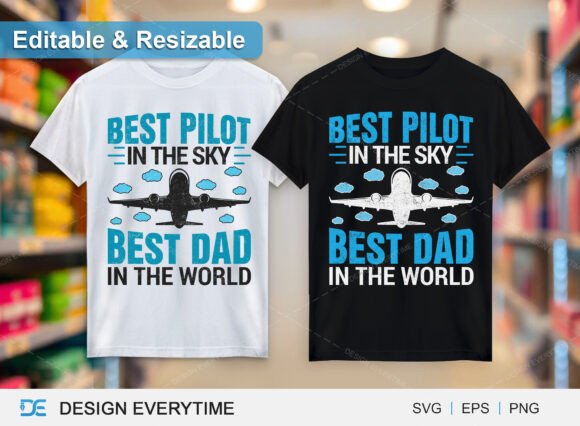
Best Pilot in the Sky Best Dad
When you work with embroidery designs day in and day out, you start to recognize which ones are going to hold up in the hoop and which ones are going to cause headaches. I have been digitizing, stitching, and selling finished embroidery products for over a decade, and I have learned to read a design before I ever thread a needle. When I first looked at Best Pilot in the Sky Best Dad, I knew this was a design that deserved a proper evaluation before I used it on client work or listed it in my shop.
First Read on the Design Personality
The first thing that struck me about Best Pilot in the Sky Best Dad is how it balances a playful theme with a heartfelt sentiment. It has that aviation motif that appeals directly to dads who love flying, but it avoids feeling like a generic pilot patch. The phrase itself carries emotional weight, and the black and white versions give you options depending on your fabric and thread strategy. As someone who reviews machine embroidery design files for real production, I appreciate when a design lets me decide the mood through color choices rather than forcing a specific palette.
This design lands squarely in the T-Shirt Designs category, but I think that label undersells its range. Yes, it works beautifully on tees, but I see it fitting just as well on a heavyweight sweatshirt, a canvas tote bag, or even a small embroidered patch for a flight jacket. The visual personality is confident without being aggressive, sentimental without being saccharine. That is a hard balance to strike in Graphics work, and this design pulls it off.
A Real Project Walkthrough
I decided to test Best Pilot in the Sky Best Dad on a project I had sitting on my workbench: a medium-weight cotton sweatshirt for a returning customer who wanted a Father's Day gift for her husband, a private pilot. She wanted something that felt personal and professional, not like a cheap iron-on. I hooped the sweatshirt with a cutaway stabilizer, used a size that fit the design comfortably without cramping the lettering, and ran a test stitch on scrap fabric first.
The black version worked best against the heather gray fabric, and I used a bright white thread for the lettering and a soft gray for the subtle outline details. The stitch-out was clean. The satin stitch elements held their shape, the fill stitch areas had even coverage, and the running stitch outlining gave the whole piece a crisp, finished look. I did not have to adjust the density or resize the file. The customer was thrilled, and I felt confident putting my name on the finished product.
Where This Design Delivers Best Results
After testing Best Pilot in the Sky Best Dad across several fabric types and product categories, I have a clear sense of where it performs strongest. This is the kind of design that rewards thoughtful placement and good fabric choices.
It excels on custom apparel like sweatshirts, t-shirts, and lightweight jackets. The layout is balanced enough to sit nicely on a left chest position or centered on the back. I also tested it on a thick canvas tote bag, and the design held up without distortion. The open areas in the lettering did not close up, and the stitch count felt appropriate for the size I used.
For embroidered patch work, this design is a natural fit. The shape and theme lend themselves to a patch that could be sewn onto a flight bag, a cap, or a kid's backpack. The black and white versions give you two distinct looks without having to re-digitize. If you are making patches for an Etsy seller or a local craft fair, this design can be a consistent seller across multiple products.
I also see strong potential in personalized gifts and holiday embroidery. Father's Day is the obvious target, but I think it works for birthdays, retirement gifts, or even as a commemorative piece for someone who earned their pilot's license. The sentiment is specific enough to feel meaningful but general enough to fit a range of recipients.
For small business owners and handmade shop operators, this design gives you a finished product that looks like you invested real thought into the digitizing. Customers can see the difference between a rushed design and one that was drafted with care. When you put this on a tote bag design or a sweatshirt embroidery piece, it elevates the whole product.
Where to Proceed with Care
No design is universal, and Best Pilot in the Sky Best Dad has a few limitations that smart embroiderers need to consider before committing to a production run. The most important factor is size. This design includes lettering and some finer detail in the pilot motif, and if you shrink it too aggressively, you risk losing clarity in the small strokes and losing readability in the text.
I recommend testing the design at your intended hoop size on scrap fabric before stitching it on a customer's garment. If you are working with baby embroidery or a small onesie, this design may be too large unless you resize it carefully. Even then, the smallest details might not stitch out cleanly on a tiny hoop.
Fabric choice matters significantly. On thin, stretchy fabrics like jersey knit tees, you need a good stabilizer to prevent the stitches from distorting. The fill stitch areas, while well-drafted, can pull on a loose weave if you are not careful. For dark fabric backgrounds, the black version of the design will not show up unless you use a contrast thread or a white thread on dark material. The white version is much more visible on dark garments, so plan your thread colors accordingly.
Curved surfaces like caps and hats present another challenge. The design layout is more horizontal than vertical, so it may not wrap around a cap front cleanly unless you have a curved hoop system or you adjust the design for the surface. If you are stitching on a cap, test the placement first and consider a smaller hoop size.
For products that need frequent washing, like kitchen towels, aprons, or baby blankets, the stitch density is a factor. Dense designs can shrink slightly or pucker after multiple washes if the stabilizer is not robust. Use a high-quality cutaway stabilizer and test a wash cycle before selling to customers who expect durability.
Visual Appeal and Customer Response
In my experience, customers respond to designs that feel cohesive. Best Pilot in the Sky Best Dad has a unified look that works whether you stitch it in monochrome or add a few accent colors. The black and white versions give you immediate options for contrasting with fabric backgrounds. When I showed the finished sweatshirt to a few regular buyers, the reaction was consistently positive. They commented on the clean lettering and the thoughtful layout. Several asked if I could make a version for a grandfather who was also a pilot.
From a brand consistency standpoint, this design fits well into a shop that sells aviation-themed items or Father's Day gifts. It feels premium without being overpriced. The design supports a handmade product narrative—you can tell the customer that you digitized it yourself and tested it for quality. That kind of transparency builds customer trust and encourages repeat business.
For digital product sellers who offer embroidery files for others to use, this design is a solid addition to a catalog. It appeals to a specific hobbyist audience—people who sew for pilots, aviation enthusiasts, and dads who love flying. If you sell on Etsy or other marketplaces, the black and white versions give buyers flexibility without overwhelming them with choices.
Practical Notes for Embroidery Designers
Before you use Best Pilot in the Sky Best Dad in a commercial project, here are a few things I always do with a new design file. First, I test it on scrap fabric. I want to see how the stitch density behaves on a medium-weight cotton, a knit, and a woven fabric. I check the hoop size requirements and confirm that the design fits within my available hoops without needing to rehoop or adjust mid-stitch.
I also run a test with both the black version and the white version on light and dark fabric backgrounds. The contrast between thread and fabric can make or break the design. A white version on a white tee is invisible, and a black version on a black cap is pointless. Plan your thread colors carefully, and always stitch a sample before cutting into the garment.
If you are selling finished products, confirm the licensing terms for commercial embroidery use before you start production. The file format details provided include resizable editable files in SVG and EPS formats for both black and white versions. That gives you flexibility to adjust the design in your preferred software, but the license terms are not included in the file description. Check with the seller to ensure your intended use is covered, especially if you plan to sell the finished items or bundle the design as part of a digital product collection.
For printable mockup work, the SVG and EPS formats are excellent. You can import them into your design software and create realistic product previews without stitching a single sample. That saves time and material when you are testing a new product idea or creating listings for your shop.
File Format and Workflow Fit
The inclusion of both SVG and EPS files in black and white versions is a practical choice. For embroiderers who work primarily with vector editing before converting to embroidery formats, these files give you a clean starting point. You can resize the design without losing quality, and the black and white distinction helps you visualize the final stitch-out before you commit to thread colors.
If you are an apparel decorator or a craft business owner who works with multiple machines, having a vector format means you can adapt the design to different digitizing software and machine formats. The digital embroidery file workflow becomes smoother when you start with a clean vector. I recommend keeping both the black and white versions in your project folder so you have options when a customer requests a color variation.
Final Judgment for Real Project Use
Best Pilot in the Sky Best Dad is a well-conceived embroidery design that works for a specific audience without being too narrow. It has a clear emotional hook, a clean visual layout, and practical black and white format options that make it adaptable to many products. It is not a design for every project—avoid shrinking it too small, be careful with thin or stretchy fabrics, and test your stabilizer before production. But for the right project, it delivers a finished result that feels personal and professional.
If you are an Etsy seller, a small shop operator, or a creative entrepreneur looking for a dependable Father's Day or aviation-themed design, this one is worth adding to your library. Test it first, choose your fabric and thread wisely, and you will have a product that customers remember.